July 16, 2026 Post 5
Today was one of those days that reminded me why I became an educator.
Our day centered around the American State Fair at Montessori de San Juan, followed by a visit to the U.S. Embassy. By the end of the evening, I was physically exhausted, but my heart and mind were overflowing.
This was our second opportunity to interact directly with Filipino students. Throughout the day, approximately 230 students visited the American State Fair, where 19 Fulbright Fellows represented 15 different states.
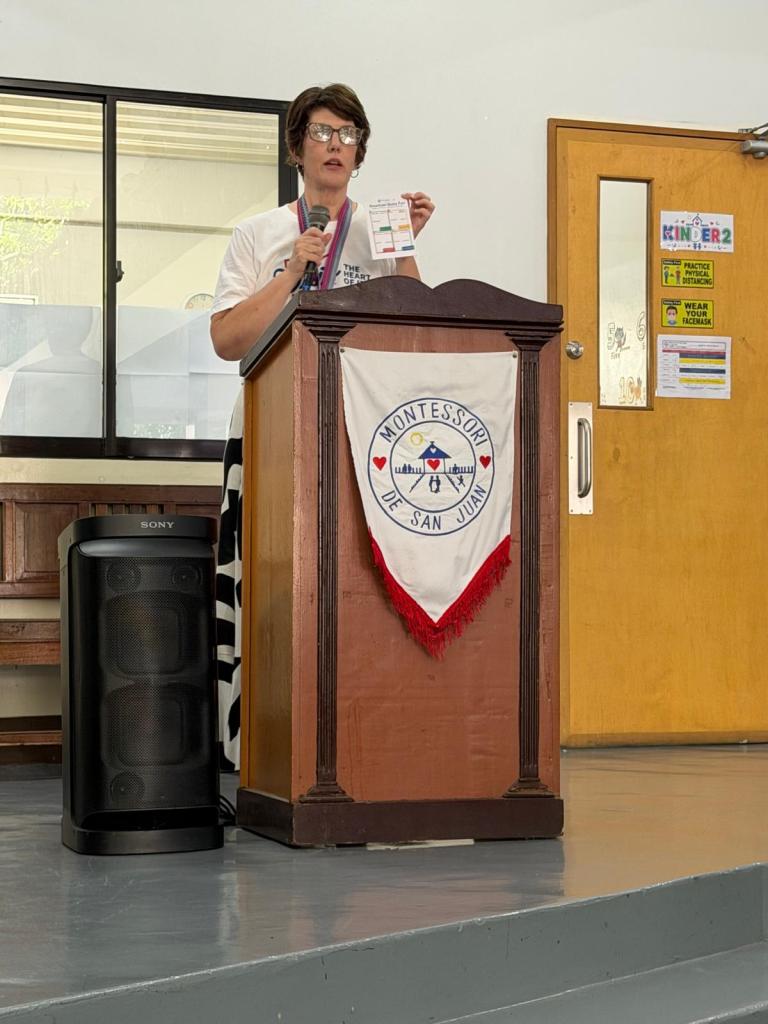
I had the privilege of welcoming the students and explaining how to navigate the fair. Each student received a passport and traveled from booth to booth, collecting stamps, asking questions, learning about each state, playing carnival-style games, and experiencing a little slice of America.
The event celebrated several important milestones: 250 years of American independence, 80 years of U.S.–Philippine relations, and 78 years of the Fulbright Program. It was a beautiful reminder that education has always been one of the strongest bridges between our two countries.
Walking through the gymnasium, it truly felt like an American state fair. There were games like cornhole, ring toss, balloon pop, and knock-‘em-down. Students won prizes, sampled popcorn, French fries, and cotton candy, and we even enjoyed Wendy’s for lunch. It was fun watching American traditions come alive halfway around the world.
What struck me most today, though, was something much simpler.
Kids are kids, no matter where they live.
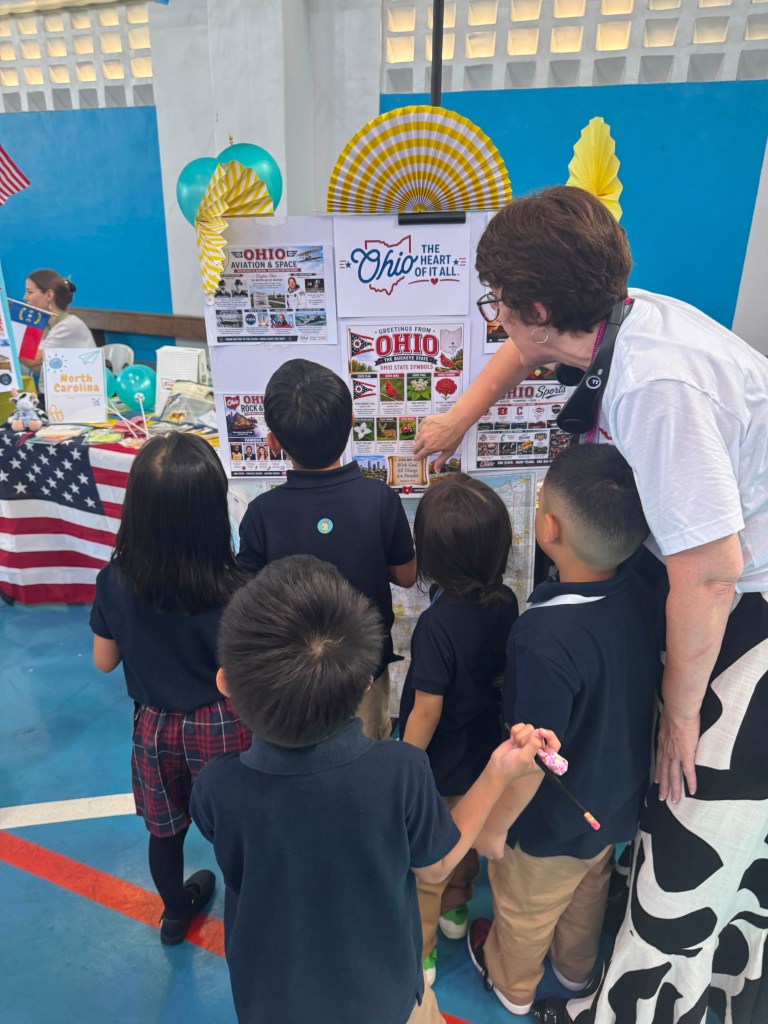
Some students eagerly asked question after question. Others quietly observed before moving on. Some laughed with their friends and made silly jokes while playing the games. It reminded me so much of the students I work with back home. Different country. Different culture. The same curiosity, energy, and excitement to learn.
One thing I continue to notice is how eager Filipino students are to practice speaking English. Everywhere we go we hear, “Good morning!” “Good afternoon!” and “Goodbye!” Every greeting is accompanied by a smile and a genuine desire to connect. Their confidence in using a second language is inspiring.
One of the highlights of my day was meeting a teacher who immediately made an impression on me. She teaches career education while continuing to teach English and had spent several years studying in the United States herself. We instantly connected over our shared passion for education.
Before leaving, I was able to donate many of the Ohio resources I had brought with me. Watching her excitement as she looked through the maps, posters, and materials reminded me that education doesn’t end when an event is over. Those resources will continue helping students learn about Ohio and the United States long after I have returned home. Knowing that made sharing them even more meaningful.
As I reflected on today’s experiences, I couldn’t help but connect them to my Fulbright driving question:
How can schools cultivate student voice, promote meaningful choice, and develop leadership?
Today, I saw all three.
Student voice was present every time a child asked a question, introduced themselves in English, or shared something they already knew about America.
Student choice was woven throughout the experience. Students decided which booths to visit, what questions to ask, which games to play, and what interested them most. Learning wasn’t something done to them, it was something they actively participated in.
Leadership wasn’t limited to the adults. The student volunteers confidently welcomed visitors, gave directions, managed activities, and supported younger students. They demonstrated that leadership grows when students are trusted with meaningful responsibility.
As educators, we often think leadership begins in middle school or high school. Today reminded me that leadership starts much earlier. It begins the moment we create environments where students feel safe enough to speak, empowered enough to choose, and confident enough to lead.
There is also a bittersweet side to these experiences.
As teachers, we naturally build relationships with students. We encourage them, celebrate their curiosity, and hope to watch them grow. Here, those relationships last only a few hours before we say goodbye, knowing we will most likely never see these students again. That may be one of the hardest parts of this journey.
Our day concluded with a wonderful visit to the U.S. Embassy in Manila. Touring the embassy and learning more about its work reinforced how programs like Fulbright strengthen relationships between nations through education. I was also excited to add a few challenge coins to my collection, a small keepsake that will always remind me of this incredible experience.
Tonight, as I prepare for another busy day, I find myself incredibly grateful.
Grateful for the opportunity to represent Ohio and the United States.
Grateful for the kindness and hospitality shown by the Filipino people.
Grateful for every student, every educator, every conversation, and every lesson.
Most of all, I’m grateful for the reminder that leadership isn’t about standing in front of others, it’s about creating opportunities for others to find their own voice.

 triciajenglishwnkhg.blog