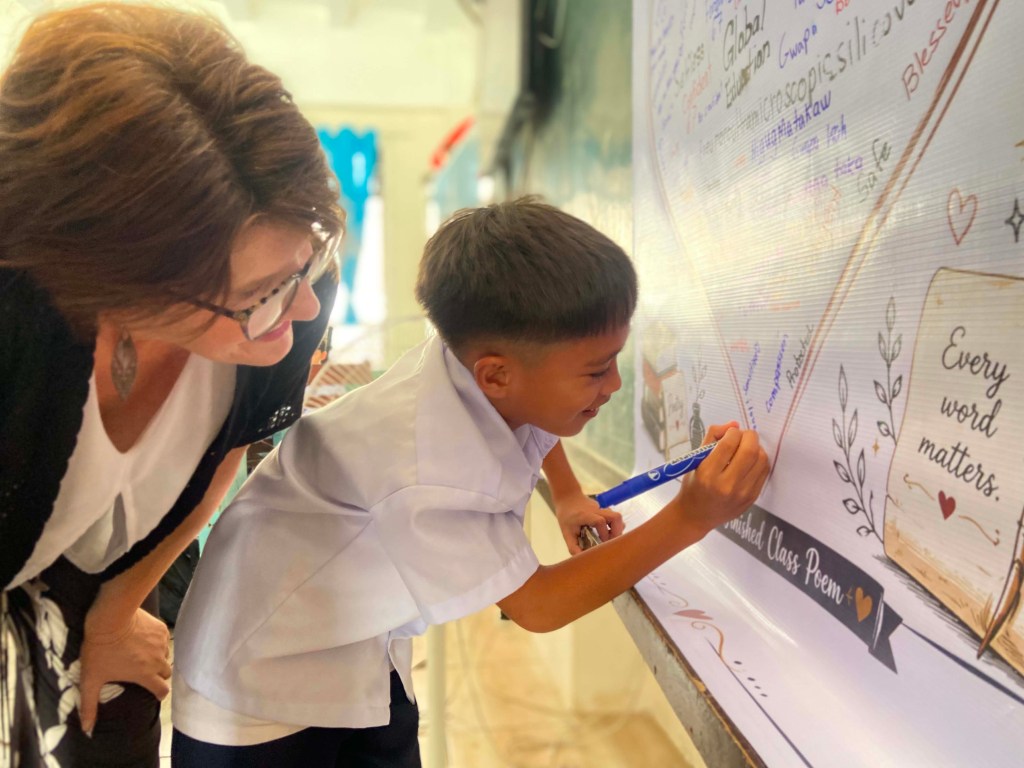
This section is designed to help educators, families, and community members build their understanding of global education and global competence. Drawing from my experiences in the Fulbright Teachers for Global Classrooms program and the Teaching and Leading for Global Education course, I have compiled definitions, organizations, assessment tools, and resources that support the integration of global learning into classrooms and communities.
What is Global Education and Global Competence?
Through my participation in the Fulbright Teachers for Global Classrooms program and the Teaching and Leading for Global Education course, I have developed my own understanding of global education and global competence.
Global Education, in my view, is an approach to teaching that helps students connect their local experiences to broader global issues, perspectives, and cultures. It encourages students to see how the world is interconnected while remaining grounded in their own community and identity.
Global Competence is the ability to understand different perspectives, communicate effectively across cultures, think critically about complex issues, and take informed action. It is the set of skills and dispositions students develop as they engage with global learning experiences.
As an educator in rural Ohio, I believe students do not have to leave their community to develop a global perspective. By exploring local issues through a global lens, students can better understand their place in the world and recognize the impact they can have both locally and globally.
Why Global Education Matters in Our Community
Global education supports future readiness by helping students develop skills needed for college, careers, and responsible citizenship. These skills include communication, collaboration, problem-solving, adaptability, and cultural understanding.
At Coshocton City Schools, our mission is to empower individuals to become literate, respectful, responsible, and independent lifelong learners in an ever-changing global society. Global education supports this mission by helping students connect local experiences to global issues and preparing them to participate successfully in an interconnected world.
Organizations Supporting Global Education
Asia Society
As I worked through the Fulbright Teachers for Global Classrooms program, this was one of the resources I kept coming back to. It helped me realize that global competence isn’t another subject to teach. It’s a way of helping students think, communicate, and connect their learning to the world around them. I still use this framework as I reflect on teaching, learning, and leadership.
World Savvy
As I continued learning about global education, I found myself looking for resources that educators could actually use in their classrooms. World Savvy was one of those resources. It helped me see how inquiry, student voice, and real-world learning can become part of everyday instruction rather than something we do only occasionally.
Harvard Project Zero
As I explored different ideas about global competence, I kept coming back to Harvard Project Zero because it helped me see what global learning could actually look like in a classroom. I especially appreciated the practical, hands-on tools that I could take back and use with my own students.
Fulbright Teachers for Global Classrooms
Without the Fulbright Teachers for Global Classrooms program, this website would not exist. It challenged me to look beyond my own classroom and rethink what global education could look like in the communities I serve. Every page of this guide reflects the learning, experiences, and conversations that shaped my journey and continue to influence my work as an educator and assistant principal.
UNESCO
As a foodie, I was excited to learn that Iloilo City is recognized as a UNESCO Creative City of Gastronomy. That discovery led me to explore UNESCO’s work and reminded me that every community has something worth preserving and something worth sharing. It also reinforced that food, culture, and history are powerful ways to connect with people and better understand a place.
Global Competence Assessment Tools
Throughout the Fulbright Teachers for Global Classrooms program, I explored a variety of global competence frameworks. Each one influenced my thinking in a different way. As I reflected on my guiding question, I realized I wanted a tool that brought together the ideas that resonated most with me, including student voice, ownership, leadership, and the connection between local experiences and global understanding. That is how my reflection framework began, and it continues to evolve as I learn and grow.
These are the resources I found myself returning to throughout that journey.
Global Leadership Performance Outcomes (Asia Society)
This was one of the first assessment tools that helped me think about how global competence develops over time. I especially liked the student friendly “I Can” statements because they make growth easy to see for both students and teachers. It also reinforced my belief that understanding our own community is where global learning begins.
Oxfam’s Global Citizenship Guides
I chose to include this guide from the Oxfam site because it closely reflects my belief that meaningful global education begins with local experiences. As a former sixth grade ELA teacher, I wanted students to see how the stories, people, and issues in their own community connected to the wider world. What stood out to me was its focus on student voice, critical thinking, empathy, and action. Reading this guide reminded me why those ideas became such an important part of my Fulbright journey and why they continue to shape my work as an educational leader.
Teaching for Global Competence in a Rapidly Changing World
This was one of the first resources we explored during the Teachers for Global Classrooms program, and I kept coming back to it throughout the course. It helped me put words to many of the ideas I had already been exploring in my own classroom. It reinforced my belief that global education doesn’t start with traveling the world. It starts by helping students better understand the place they call home.
The Rooted Locally, Thinking Globally Reflection Framework (Working Doc)
As I explored different global competence frameworks throughout my Fulbright journey, I realized I wanted a reflection tool that reflected the questions I was asking about student voice, ownership, leadership, and the connection between local experiences and global understanding. That became the starting point for developing the Rooted Locally, Thinking Globally Reflection Framework.
Like my own understanding of global education, this framework is still evolving. I hope it encourages educators and school leaders to reflect on their own practice as we continue learning together.
Additional Background
Place-Based Education: Think Globally, Teach Locally
This article closely aligns with the philosophy that has guided my work as an educator. It reinforced my belief that meaningful global learning begins with students understanding their own community before connecting to the wider world. Reading this article helped validate the direction I was already taking in my classroom and ultimately influenced the thinking that led me to my Fulbright journey, my guiding question, and my commitment to helping students see themselves as contributors to both their local and global communities.
Don’t Ask Where I’m From, Ask Where I’m a Local
This TED Talk challenged me to think differently about identity, belonging, and the meaning of “place.” It became the inspiration for my inter-school activity during the Teachers for Global Classrooms program, and I shared it with my sixth-grade students to help them reflect on their own communities and the experiences that shape who they are. It reinforced my belief that understanding where we are “a local” is a powerful first step in connecting with others and engaging in meaningful global learning.2
PBL Works
Long before I became a Fulbright Teachers for Global Classrooms participant, PBLWorks was one of the resources I turned to when planning instruction. It helped me design learning experiences that connected students to real-world problems through inquiry, collaboration, student voice, and choice. Looking back, I realize that many of the ideas I now associate with global education were already part of my classroom through project-based and place-based learning. Fulbright didn’t change the way I believed students learn best, it gave me the language, research, and global perspective to better understand and strengthen the work I was already passionate about.
The Six Elements of Place Based Education | Place Based Education Conference
I included this resource because it moves beyond the “why” of place-based learning and focuses on the “how.” The six-step framework gives educators practical ideas for engaging students in their community while helping them see how local experiences can build global competence
How to Be a Global Thinker
I included this article because it challenged me to think differently about what it means to prepare students for the future. Global competence isn’t another subject to teach, It’s a mindset that can be woven into the learning that’s already happening. The ideas in this article complement my belief that students can begin developing those habits of thinking by exploring the people, places, and experiences closest to them.

