August 2025 – December 2025
When people hear that I participated in the Fulbright Teachers for Global Classrooms Global Competence Course, they often assume it was simply an online class about teaching global education.
It was so much more than that.
The ten-week course challenged me to rethink what it means to prepare students for an interconnected world while also helping me recognize something I hadn’t fully appreciated before: much of what I believed about teaching had been pointing toward global education all along.
The timing couldn’t have been busier.
During the day, I was teaching sixth-grade English Language Arts. In the evenings, I was teaching as an adjunct faculty member at Zane State College while also working part-time as a bartender. Somewhere between lesson planning, grading papers, preparing college coursework, and serving customers, I was completing Fulbright readings, participating in discussion boards, attending webinars, collaborating with educators across the country, and building my Global Education Toolkit.
There were evenings when I wondered if I had taken on too much.
There were weekends when I spent hours reading articles instead of relaxing.
There were moments when I questioned whether I could keep up.
But I never questioned whether it was worth it.
Every week introduced a new layer of thinking. We began by exploring the foundations of global competence and what it truly means to prepare students for a rapidly changing world. From there, we examined citizen diplomacy, place-based education, digital literacy, information literacy, artificial intelligence in education, cross-cultural communication, and the role educators play as leaders within their own schools and communities.
What made the course unique was that it never allowed us to simply learn about these ideas.
We were expected to put them into practice.
Weekly discussion boards challenged us to reflect on our classrooms. Live webinars introduced us to researchers, educators, and global learning experts. Spotlight Challenges encouraged us to implement new strategies with our students and share the results with our cohort. Throughout the course, we also developed a Global Education Toolkit filled with resources and instructional ideas that we could immediately begin using in our schools.
Professional learning became professional doing.
One week, in particular, completely changed my perspective.
Week Three was titled “Where Am I Local?”
As we explored place-based education, read about helping students understand their own communities, and discussed multiple perspectives, something clicked.
I realized Fulbright wasn’t asking me to change my philosophy as an educator.
It was helping me name it.
For years, I had believed that meaningful learning begins close to home. Whether students were investigating local environmental issues, interviewing community members, analyzing literature through multiple perspectives, or developing solutions to real problems in our region, I had always tried to help them understand that their own experiences mattered.
Fulbright simply gave me the research and language to explain why.
That week reaffirmed something I continue to believe today.
Global competence doesn’t begin with international travel.
It begins with curiosity.
It begins with understanding your own community.
It begins when students recognize that where they come from matters.
One of the greatest parts of the course was learning alongside approximately 120 educators from across the United States. Although we represented different grade levels, content areas, and communities, we quickly discovered how much we had in common. Every educator was passionate about helping students become thoughtful, informed citizens capable of making a positive difference.
One relationship, however, became especially meaningful.
As part of our Inter-School Activity, I partnered with Cora. What started as a collaborative assignment quickly became one of the highlights of the course. Together we planned learning experiences that connected our classrooms despite the distance between us. Our students had opportunities to learn from one another, ask questions, and experience perspectives outside their own communities.
Watching students engage with peers from another part of the country reinforced something I had always believed: students don’t have to travel across the world to begin thinking globally. Sometimes all it takes is connecting with someone whose experiences are different from their own.
Over time, the professional collaboration between Cora and me developed into a genuine friendship. Throughout the course we encouraged one another, exchanged ideas, celebrated successes, and supported each other through the challenges of balancing work, family, and Fulbright expectations. Looking back, that friendship remains one of the greatest gifts of the program.
As I continued working through the Spotlight Challenges, I found myself bringing more and more of the coursework directly into my classroom.
Instead of waiting until the course ended to implement new ideas, my students became part of the journey.
One of our largest projects grew from that mindset.
Throughout the semester, students worked in teams to research thirteen countries that had previously hosted Fulbright Teachers for Global Classrooms participants. Each group became experts on one country, exploring its geography, history, education system, traditions, culture, food, and daily life.
What began as a research project gradually became something much larger.
Students weren’t simply collecting facts.
They were comparing cultures.
They were asking thoughtful questions.
They were recognizing similarities between people who lived thousands of miles apart.
Most importantly, they were discovering that every community has stories worth telling.
To celebrate their learning, students transformed our classroom into an international gallery. Teachers, staff members, parents, and community guests were invited to walk through the exhibits while students proudly presented what they had learned. Rather than standing in front of the room giving presentations, students engaged visitors in conversations, answered questions, and shared the cultures they had spent weeks exploring.
Each group also prepared tasting samples representing foods from their assigned country.
Watching visitors sample international foods while students enthusiastically explained the traditions behind them created an atmosphere unlike anything I had experienced in my classroom before.
The room wasn’t just filled with projects.
It was filled with curiosity.
It was filled with conversations.
It was filled with learning.
As I watched my students confidently teach adults, I realized something.
The Fulbright coursework wasn’t happening separate from my classroom.
It was transforming my classroom.
Then, just before Christmas break, another unforgettable moment arrived.
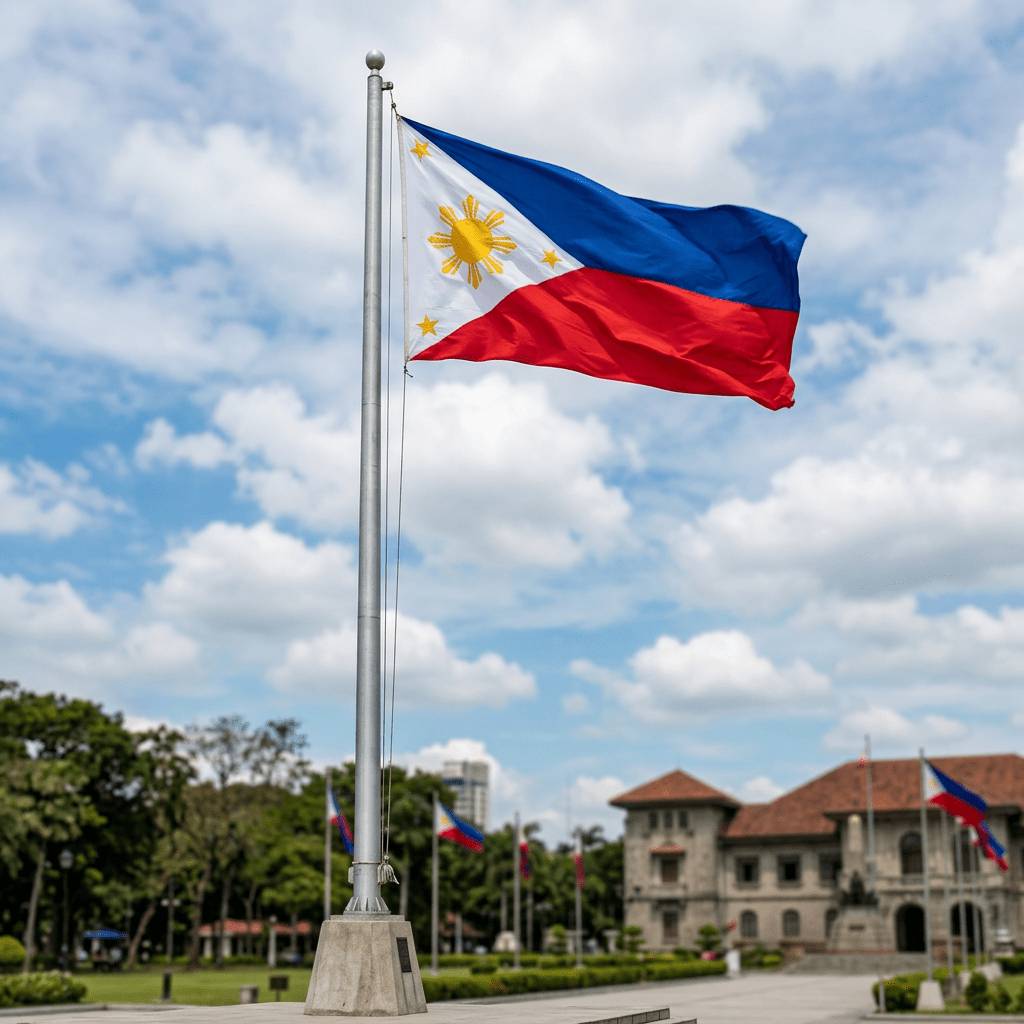
After weeks of waiting, I finally received my international placement.
The Philippines.
Seeing those words on the screen made everything feel real.
I immediately ran to each classroom and shared with my students I’d be heading to the Phillipines.
Their excitement matched my own.
Questions flew around the room.
“What will the schools look like?”
“What foods will you try?”
“Will you bring us pictures?”
“What are the students like?”
Some ran up to the large map on my wall to check out where I’d be on the other side of the world!
By that point, they had spent an entire semester exploring countries around the world alongside me. They understood why this experience mattered. They knew I wasn’t traveling simply to see another country.
I was traveling to become a better teacher.
As we left for Christmas break, many students reminded me to take lots of pictures and promised they couldn’t wait to hear about everything I would learn.
Walking out of school that afternoon, I realized Fulbright had already begun changing my classroom long before I ever boarded an airplane.
The coursework had challenged my thinking.
The relationships had expanded my perspective.
The projects had transformed student learning.
Most importantly, I had discovered that global education wasn’t something new I needed to add to my teaching.
It was the natural extension of work I had been doing for years.
The ten-week course didn’t change who I was as an educator.
It gave me the confidence to fully embrace the educator I had already become.
As the calendar turned to 2026, I looked ahead to the next chapter of my Fulbright journey—meeting my cohort in person at the Global Symposium in Washington, D.C., refining my guiding question, and preparing for the international field experience that would soon take me halfway around the world.
The journey was just beginning.


