Spotlight Challenges
I Used to Think Now I think
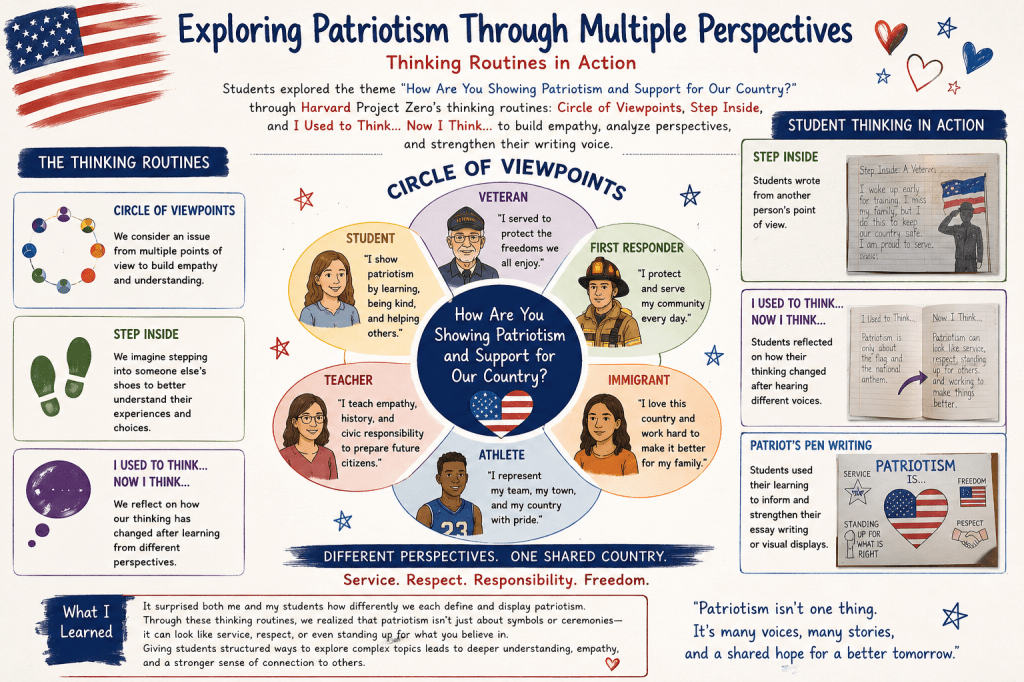
I used Harvard Project Zero’s Circle of Viewpoints, Step Inside, and I Used to Think… Now I Think… thinking routines as students explored the question, “How Are You Showing Patriotism and Support for Our Country?” The goal was to help students understand that patriotism can look different depending on a person’s experiences and perspective. Students used these routines to develop either a Patriot’s Pen essay or a project that reflected their thinking.
This activity led to some of the best discussions of the year. My students and I were surprised by how differently we each defined patriotism. As they listened to one another, students realized patriotism can be shown through service, respect, kindness, and standing up for others—not just symbols or ceremonies. The thinking routines helped students build empathy and strengthen their writing.
Ten students chose to submit essays to the Patriot’s Pen contest, while approximately 50 classmates created vision boards, letters to veterans, and shadow boxes that were displayed during our school’s Veterans Day program. Sharing their work with veterans and community members gave students an authentic audience and made the project more meaningful.
If I taught this lesson again, I would introduce the thinking routines earlier in the unit so students could revisit them throughout the writing process. I would recommend these routines to any teacher looking to help students explore multiple perspectives while building stronger discussion, reflection, and writing skills.
Text to Text, Text to Self, Text to World
Activity Description
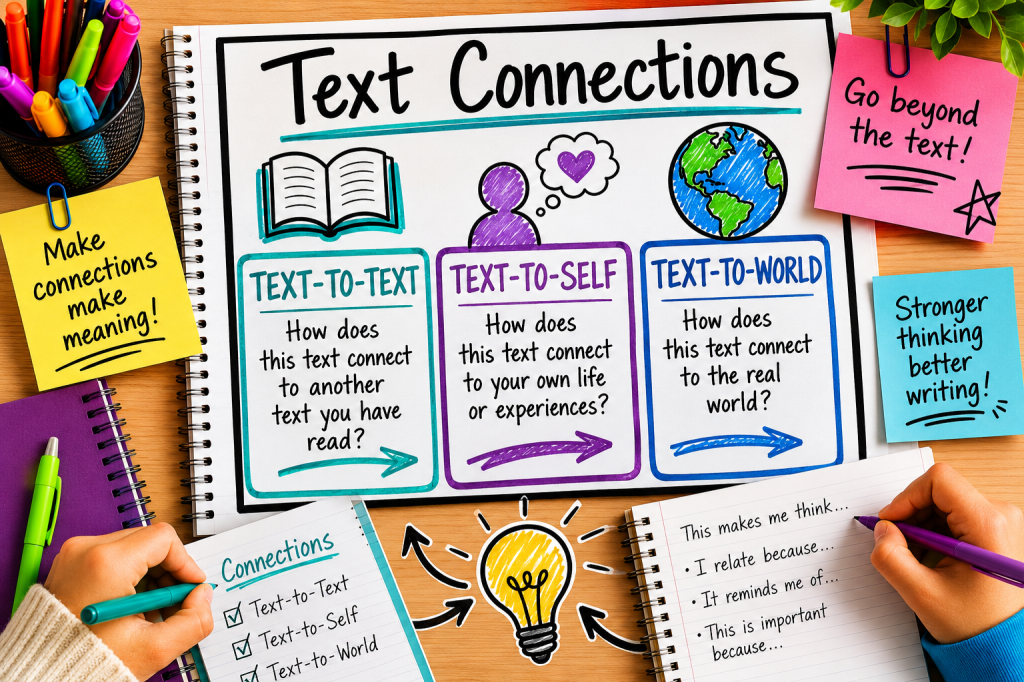
I used this activity after my sixth-grade students finished reading Boy: Tales of Childhood by Roald Dahl and completed a constructed response reading assessment. As part of an eight-station rotation, this resource was one of three writing stations where students revisited their original responses. The goal was to help students move beyond simply citing evidence by making Text-to-Text, Text-to-Self, and Text-to-World connections that strengthened their thinking and writing.
This was one of my favorite stations because students began to see revision as improving their thinking rather than simply fixing mistakes. Text-to-Self connections came most naturally, while Text-to-Text and Text-to-World connections required more discussion but often led to the strongest responses. Students made deeper connections to the themes, the author’s purpose, and the world around them.
Next time, I would spend a little more time modeling the three types of connections before students worked independently. I would also have students share examples with one another to encourage deeper thinking.
I would recommend this resource to other teachers because it can be used with almost any text. Although I used it as a revision activity, I would also incorporate it during the initial reading of a text so students are making meaningful connections throughout the unit instead of only at the end. Pairing the handout with class discussion or an anchor chart makes it an easy strategy that strengthens both comprehension and writing.
Inter-School Activity
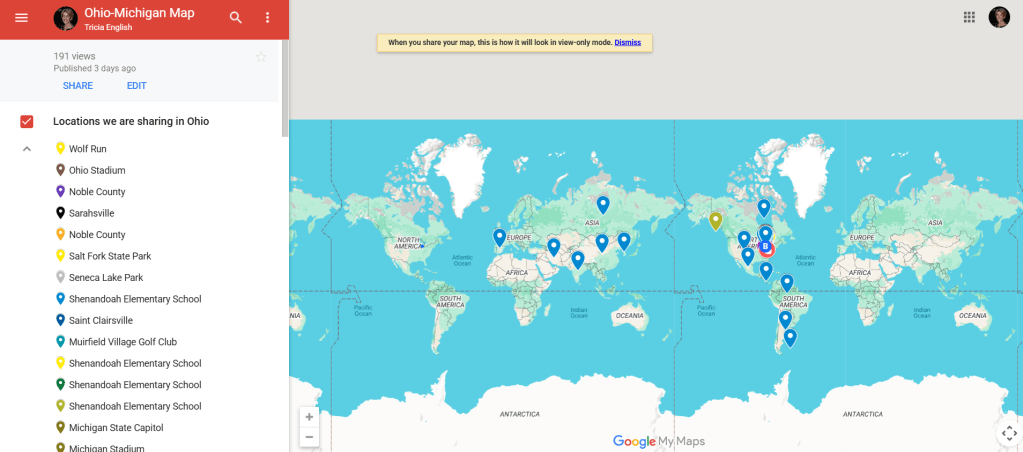
Google My Maps. (This is the link to the program, not the project)
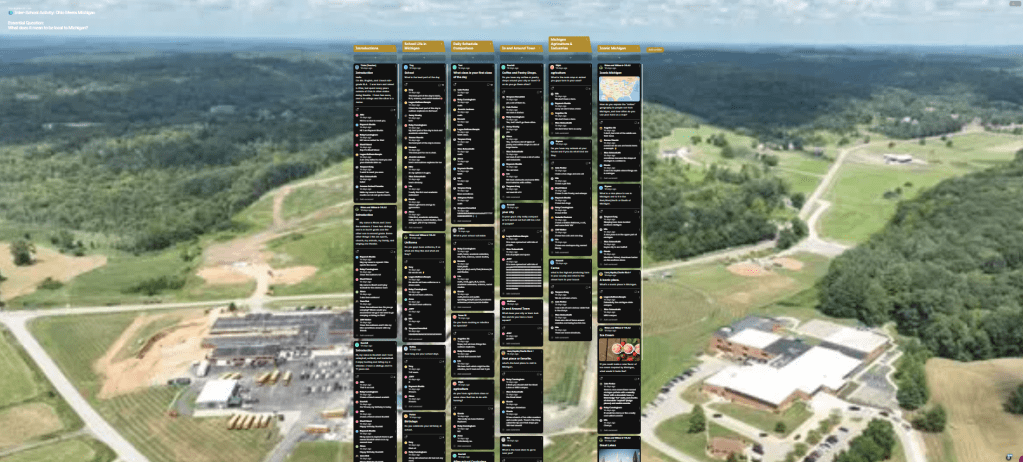
This inter-school collaboration connected my sixth-grade students in Ohio with a fifth-grade classroom in Michigan to explore the concept of what it means to be “local.” Through shared Padlet discussions, collaborative Google My Maps, and a live Google Meet, students examined how geography, culture, and community shape identity while developing communication, collaboration, and digital citizenship skills. The project demonstrated that meaningful global education can begin by understanding our own communities and learning from the experiences of others. By engaging with peers beyond their own school, students gained a broader perspective and discovered how technology can foster authentic connections across communities and prepare them for participation in an interconnected world.